
Why a Healthy Weight Matters: Add Years to Your Pet’s Life

Did you know an estimated 60% of dogs and cats are considered overweight or obese in the US? While those extra pounds might seem harmless, or even cute, the truth is that carrying excess weight puts your pet at increased risk of serious chronic illness and can drastically shorten their life.
The Health Risks of Pets Being Overweight:
Overweight pets face a higher risk of:
- Diabetes
- Arthritis and joint pain
- Heart and respiratory disease
- Certain types of cancer
- High blood pressure
- Kidney disease
And the consequences go beyond health issues. Studies show:
- An obese cat's life expectancy is 5-10 years, compared to the expected 10-15 years.
- Dogs may live up to 2.5 years less if they’re overweight (American Veterinary Medical Association).
Weight Isn’t the Only Number That Matters
Just like humans, two pets of the same breed and weight can have very different health profiles. Instead of focusing only on the number on the scale, veterinarians recommend assessing your pet’s Body Condition Score (BCS).
It's a standard visual system that looks at body shape and fat distribution. It’s a more accurate measure of overall health than weight alone, and it can help catch early signs of unhealthy weight gain or loss. This is why Body Condition Score is a better indicator of whether your pet is at a healthy weight.
Here are helpful visual guides:
- Dog BCS Chart (WSAVA, 9-point scale)
- Cat BCS Chart (WSAVA, 9-point scale)
Research Confirms the Risk: BCS and Lifespan in Dogs & Cats
A 2023 study in Frontiers in Veterinary Science analyzed the relationship between Body Condition Score (BCS) and life expectancy in dogs and cats. This study used a 5-point BCS scale, but it is the same principle as the more common 9-point scale, where:
- 1 is very thin
- 2 is thin
- 3 is ideal
- 4 is overweight
- 5 is obese
The study tracked lifespan based on BCS in both dogs (Chart A) and cats (Chart B):
What the data shows:
- Dogs and cats with a BCS of 3 consistently lived longer across all age groups.
- Even pets with a BCS of 4 (overweight) had reduced lifespan.
- Pets with a BCS of 5 (obese) had the shortest life expectancy, regardless of age.
- The trend held true regardless of the age at which pets were assessed.
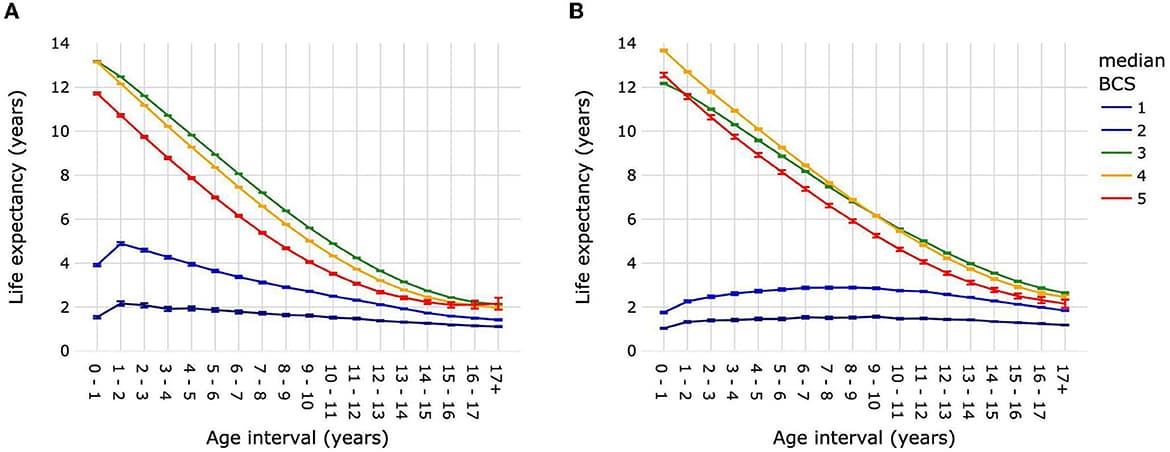
These findings make one thing clear: Maintaining a healthy body condition is one of the most powerful things you can do to help your pet live a longer, healthier life.
How Every Wag Can Help
We built the Every Wag app to help pet parents stay ahead of preventable health issues like obesity with tools that are easy to use and backed by expert guidance. With the app, you can:
- Track your pet’s weight and BCS with charts (for free!)
- Set reminders to track your pet's weight and BCS (recommended at least every 30 days)
- Use our nutrition calculator to estimate your pet’s daily calorie needs
- Calculate the portion of food you need for each meal based on your pet’s goals
- Log observations, symptoms, and other changes in your pet’s routine
Tracking your pet’s progress monthly makes it easier to spot small shifts before they become big problems.
Talk to Your Vet Before Making Diet Changes
Always consult your veterinarian before starting a new diet or weight-loss plan. They’ll help ensure your pet’s weight goals are safe and tailored to their health history.
A healthier pet = a longer, happier life. Whether you’ve got a chunky cat, a growing puppy, or a turtle with a big personality, Every Wag is here to help you track and manage care with confidence.
Bottom Line: A healthy weight isn’t just about looks, it’s about giving your pet the best shot at a long, happy life. Small changes made today can add years of wagging tails, cozy snuggles, and playful zoomies.